
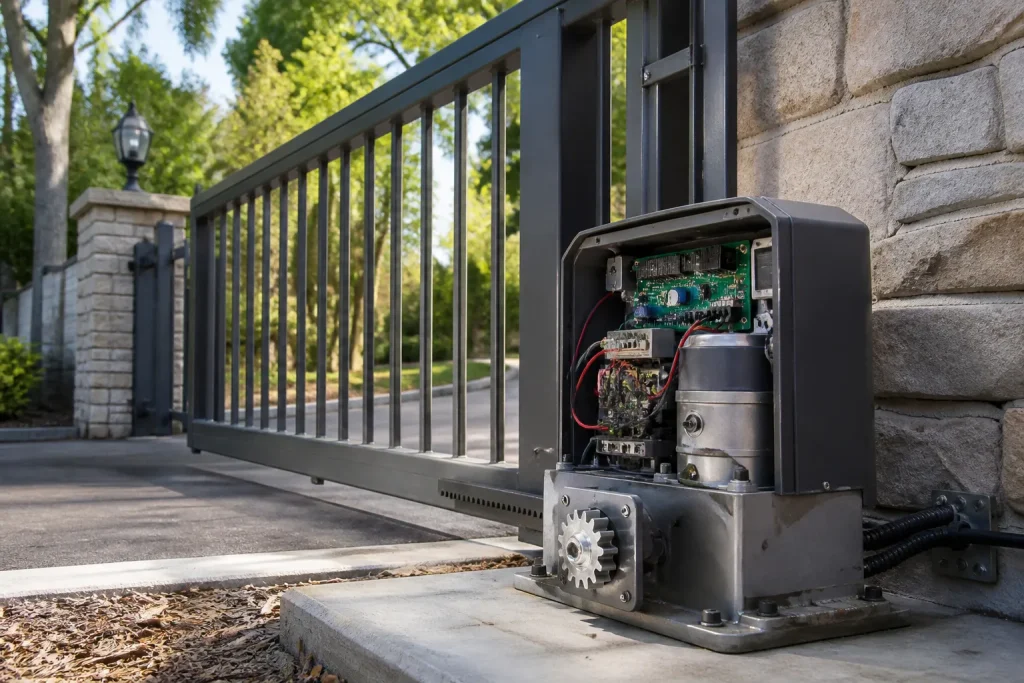
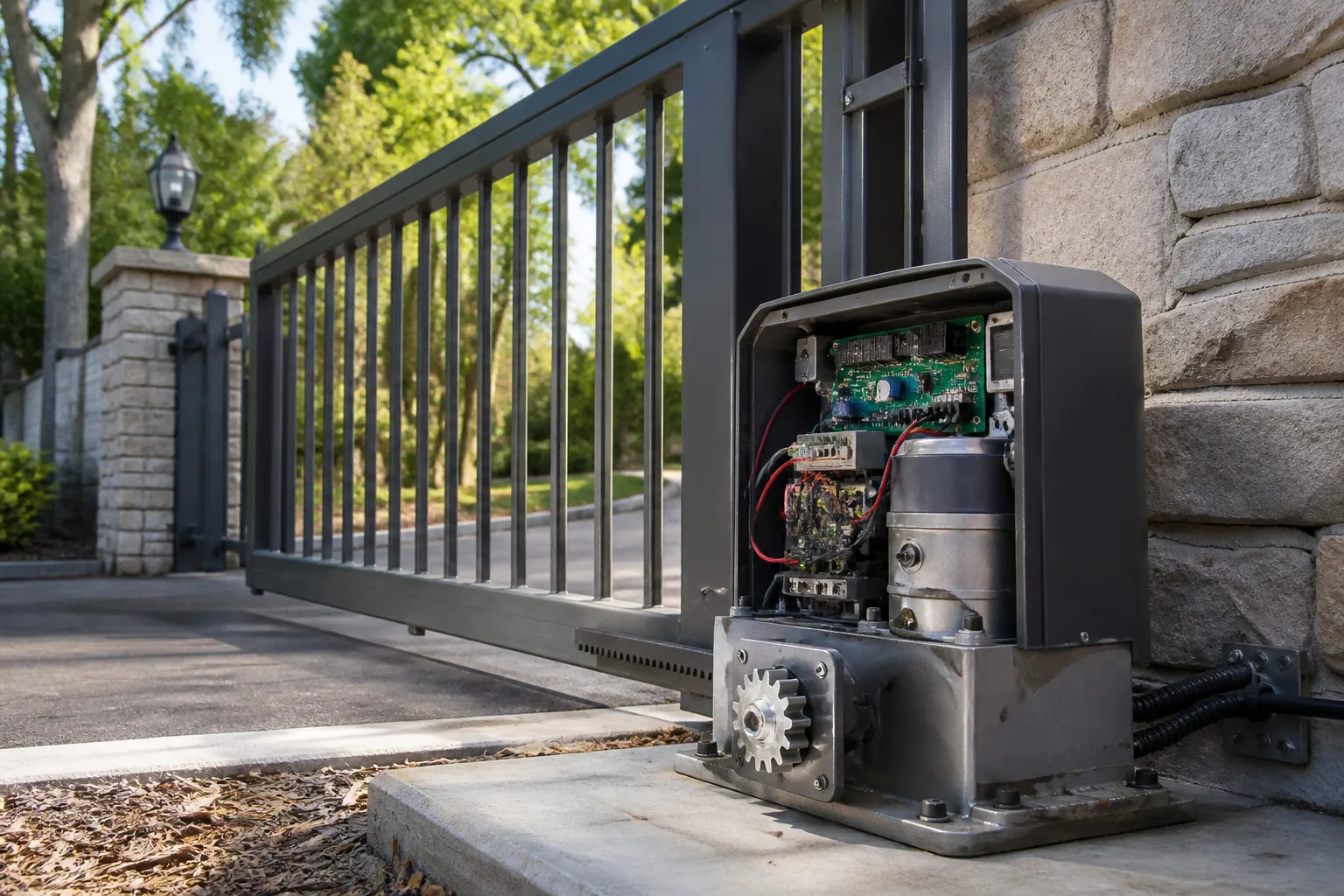
5 Mistakes to Avoid With Gate Motor & Opener
The five costliest gate motor mistakes are using petroleum-based lubricants on nylon components, ignoring limit switch drift, bypassing obstruction sensors, undersizing solar or battery backup systems, and resetting logic boards without saving calibration data. Each one accelerates wear in ways that show up as “sudden” failure six months later. If you’d rather have a Sacramento gate specialist handle your motor service, call Highpoint Gate Repair California at (866) 550-7854.
Here’s the thing about WD-40 and gate motors: it feels like you’re doing maintenance, but you’re actually washing away the grease that matters. We see this constantly on service calls across Sacramento, especially with DIY installations where the owner read a generic “lubricate moving parts” tip online. That petroleum spray displaces the lithium or moly-based grease the manufacturer applied, and within a few weeks the chain is running dry against the sprocket. The chain stretches. The rack teeth wear. The motor starts working harder to hit the same travel distance. What reads as “normal wear and tear” on the invoice was actually preventable damage from the wrong can on the shelf.
1. Using the Wrong Lubricant on Nylon Rack Components
Petroleum-based sprays destroy nylon rack teeth. Full stop. Operators like the Mighty Mule FM500 and several Ghost Controls models use nylon gearing specifically because it’s quiet and self-lubricating under normal conditions. Spray WD-40 or a similar petroleum product on that rack, and the solvent attacks the polymer structure. The teeth get brittle. They chip. Then the metal pinion starts chewing into damaged nylon, and the motor amp draw spikes because it’s pushing through uneven resistance.
We’ve replaced racks in Sacramento’s Pocket-Greenhaven neighborhood where the teeth looked like they’d been gnawed by rodents. Nope — just the wrong lubricant, applied quarterly, for two years.
What to use instead:
- White lithium grease in spray form for metal chains and sprockets
- Silicone-based lubricant for nylon racks and plastic guide wheels
- Manufacturer-specified grease for sealed gearboxes (never open a sealed unit)
Apply sparingly. Excess grease attracts dust and grit, which creates grinding paste. In Sacramento’s dry summers, that dust accumulation happens fast.
2. Ignoring Limit Switch Drift
A limit switch that’s off by two inches doesn’t sound like an emergency. It is. When the open or close limit is misaligned, the motor reaches the physical stop of the gate travel before the electronics cut power. The motor stalls against mechanical resistance. The thermal overload may trip eventually, but not before that stall current heats the windings and stresses the gearbox.
We see this most often on Viking and DoorKing operators after seasonal temperature swings. The metal gate frame expands in Sacramento’s 100-degree August afternoons and contracts in January. That movement shifts the magnet or cam position relative to the limit switch. Two inches of drift means the motor stalls for one to three seconds on every cycle. Multiply that by four cycles daily over six months, and you’ve added roughly 1,000 unnecessary stall events to a motor rated for maybe 5,000 in its lifetime.
Signs your limits have drifted:
- Gate “bounces” slightly when reaching the open or closed position
- Motor hums for a beat after the gate visually stops
- Intermittent thermal overload trips on hot days
- Remote must be pressed twice to complete a cycle
Limit adjustment takes ten minutes with the right tool. Ignoring it costs you a motor rebuild.
3. Bypassing the Obstruction Sensor “Just Once”
Every gate operator sold in the last twenty years has an entrapment protection requirement. The obstruction sensor detects resistance and reverses the gate. When that sensor triggers repeatedly, owners get frustrated. They override it. They jumper the contacts. They “just need to get the car through this one time.”
Here’s what actually happens. Without the sensor active, the gate doesn’t reverse when it hits the planter box, the garbage can, or the trailing edge of your SUV. The drive arm takes the full impact load. It bends microscopically at first. You don’t see it. The gate still moves. But now the geometry is wrong. The motor fights side loading through every cycle. The worm gear in the gearbox starts wearing on one flank only. Six weeks later, the gate stops mid-travel and the technician finds a sheared gear — but the real failure started with that single override.
We pulled a bent drive arm off a Ghost Controls system in East Sacramento last month where the owner admitted he’d been overriding the sensor for “maybe two weeks” while waiting for a replacement part. The part was $12. The gearbox rebuild was $340.
If your sensor is nuisance-tripping, fix the underlying cause. Clean the photo eyes. Adjust the sensitivity. Replace the worn roller. Don’t bypass the safety system.
4. Undersizing Solar Panels or Battery Backup
Solar-powered gate operators are popular in Sacramento’s outlying areas — El Dorado Hills, Wilton, the rural pockets of Placer County where trenching AC power isn’t practical. But solar sizing is where optimism meets physics, and physics always wins.
A 24V operator needs stable voltage to maintain its force and speed calibration. When panel output drops below the charge threshold, the battery supplies the deficit. If the battery is undersized, or the panel is shaded by summer foliage, voltage sags. The motor controller detects the drop and compensates by increasing current draw. The motor “hunts” — it surges and stalls in micro-cycles trying to maintain speed. That hunting is invisible to the naked eye but murderous on the gearbox.
We’ve replaced Elite and Mighty Mule gearboxes where the owner insisted the solar “worked fine for years.” It did, until the battery aged and its effective capacity dropped below the threshold. The motor hunted through two hundred cycles a week for eight months. The gearbox teeth looked like they’d been filed down.
Proper solar sizing rules:
- Panel wattage should exceed calculated load by 30% minimum for December insolation
- Battery amp-hour rating should support 7–10 days of zero solar input
- Test actual voltage at the operator terminals under load, not at the battery posts
- Replace batteries every 3–4 years in Sacramento’s heat, regardless of claimed cycle life
5. Resetting Logic Boards Without Documenting Settings
Modern gate operators store force, speed, and limit calibration in non-volatile memory. When the board fails or glitches, the default troubleshooting step is a factory reset. That clears the fault. It also clears every custom setting that made your specific gate run properly.
Here’s the problem: most owners don’t know what their force settings were. The installer set them. The gate worked. Years pass. Then a power surge or moisture intrusion causes erratic behavior. Reset. Now the gate runs on factory defaults, which assume a 16-foot, 600-pound aluminum cantilever gate with new bearings. Your gate is a 20-foot wrought iron slider with ten years of roller wear. The default force setting is too low, so the motor stalls on the slightest friction increase. You bump the force up “just a little” to compensate. Now you’re running 40% over design load. The gearbox dies in fourteen months.
Before any reset, photograph the display or record the DIP switch positions. Document force settings in pounds or percentage. Note the speed setting. If you’re in Sacramento and this already happened, our gate motor and opener service includes full recalibration with documented baseline settings you can reference later.
When to Call a Pro
If your gate is making new noises, stopping short, or requiring multiple remote presses, the motor is telling you something. Catching it early means adjustment. Waiting means replacement. In our experience across 446 reviewed jobs, the owners who call at the first sign of change spend about 60% less than those who wait for complete failure.
Related services in Sacramento: Gate Repair in West Covina | Gate Installation in West Covina
The Bottom Line
Gate motors don’t fail randomly. They fail predictably from specific stresses that owners and technicians introduce — wrong lubricants, ignored drift, bypassed safeties, undersized power, and undocumented resets. Avoid these five mistakes and your operator will likely outlast the gate itself.
Key takeaways:
- Petroleum lubricants destroy nylon; use lithium or silicone matched to the component
- Two inches of limit drift adds thousands of stall cycles annually
- One sensor bypass can bend drive geometry and cascade into gearbox failure
- Solar systems need 30% panel oversizing and battery replacement every 3–4 years in Sacramento heat
- Photograph all settings before any logic board reset
If you’re in Sacramento and your gate motor is showing early warning signs, Highpoint Gate Repair California offers free estimates. Call (866) 550-7854 and you’ll speak directly with Isaac or his team — the same people who’ll show up to do the work.
Frequently Asked Questions
Metal chains and sprockets need light lubrication every six months in Sacramento’s dry climate; nylon components should be checked annually but rarely need reapplication unless visibly dry. Over-lubrication attracts dust and causes more problems than under-lubrication. Call (866) 550-7854 if you’re unsure what’s on your system now — we can identify it and recommend the right product.
Limit switch drift is the most common cause, followed by increasing mechanical resistance from worn rollers or track debris. The motor hits its force limit and stops as a protective measure. Check for physical obstructions first. If the gate moves freely by hand but stops under power, the limits need recalibration or the force settings need adjustment — both are quick diagnostic items we handle same-day in most Sacramento areas.
No. Petroleum-based products including WD-40 dissolve the factory grease and attack nylon components. Use white lithium grease for metal chains on brands like Viking or DoorKing, and silicone lubricant for any plastic or nylon contact surfaces. The wrong grease voids some manufacturer warranties and accelerates wear by a factor of three to five based on what we’ve measured in the field.
Most quality operators have a 15–20 year design life if properly maintained. A ten-year-old motor with a failed gearbox or logic board is usually worth repairing if the frame and drive arm are sound. Replacement makes more sense when multiple failures stack up, parts are obsolete, or the original unit was undersized for the gate. We evaluate this honestly on every call — 11 years of gate-only work means we’ve seen which models age well and which don’t. Call (866) 550-7854 for a free estimate.
Written by Isaac Bloom, Owner & Lead Technician at Highpoint Gate Repair California, serving Sacramento since 2015.
Need Gate Repair Help?
Call Highpoint Gate Repair California — licensed & insured, here with fast after-hours help in California.
(866) 550-7854