FAAC Gate Repair in Sacramento: A Homeowner’s Guide
FAAC gate repair in Sacramento requires technicians who understand hydraulic drive systems, not just standard electromechanical operators. Most FAAC failures in the field — fluid leaks, erratic gate movement, position drift — trace back to hydraulic seal degradation or encoder feedback errors that generalist repair companies misdiagnose as motor or control board problems. If you’re seeing delayed response, hydraulic fluid pooling, or your gate creeping open under wind load, the issue is almost certainly in the hydraulic circuit or its electronic control logic, and calling a technician without FAAC-specific experience usually leads to unnecessary part replacements.
If you’d rather not troubleshoot this yourself, Highpoint Gate Repair California handles FAAC diagnostics and repair across Sacramento. Call (866) 550-7854 for a free estimate.
Why FAAC Hydraulic Systems Fail Differently Than Chain-Drive Operators
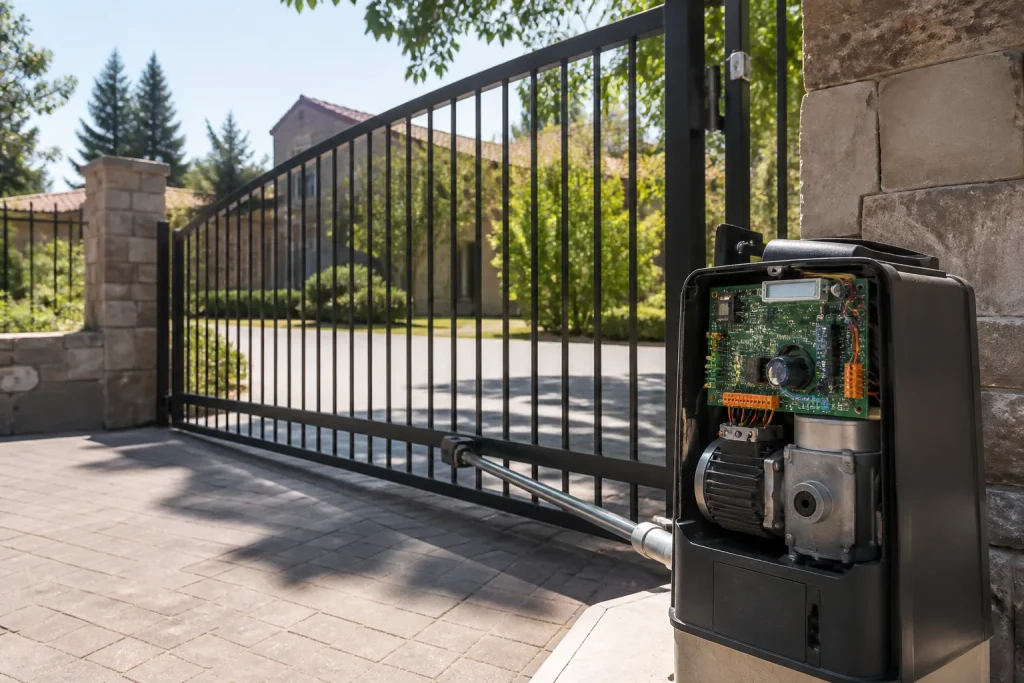
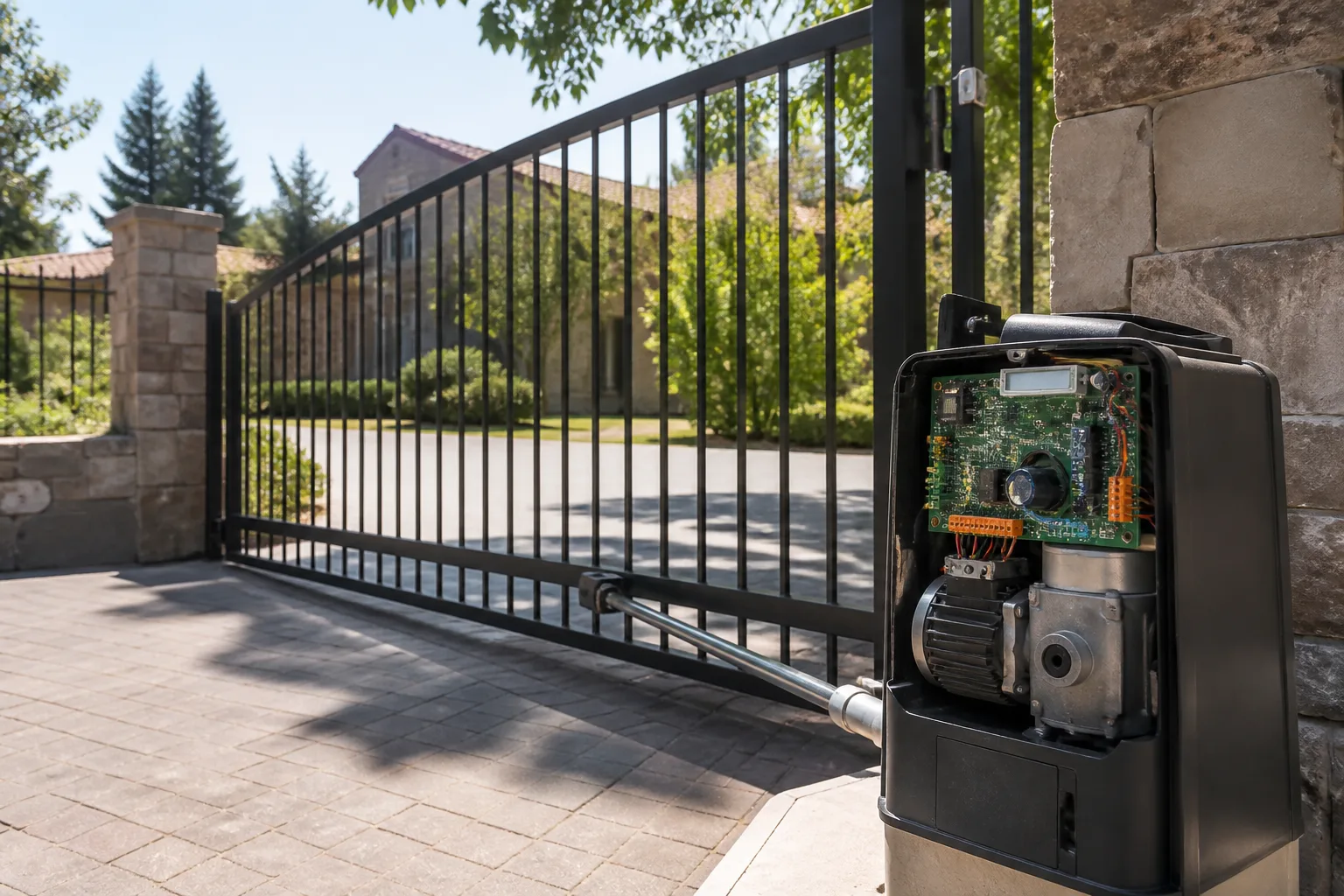
Most gate technicians in Sacramento cut their teeth on LiftMaster or Linear electromechanical operators — chain-drive or rack-and-pinion systems where a motor turns a mechanical gear train. FAAC’s 400 series and 760 series use hydraulic pistons driven by an oil pump. The motor doesn’t move the gate directly; it pressurizes hydraulic fluid that actuates the piston. This architecture gives FAAC operators their signature smooth acceleration and high duty-cycle tolerance, but it also means the failure modes are completely foreign to technicians trained on mechanical systems.
We’ve been called out to properties in Natomas and Pocket-Greenhaven where a previous technician replaced the control board twice, never checked the hydraulic fluid level, and missed a failing encoder that was sending erratic position feedback. The owner spent $800 on parts that didn’t solve the problem. The actual issue was a $12 O-ring on the hydraulic cylinder and a recalibration.
Here’s what separates hydraulic from electromechanical failures:
- Fluid leaks precede mechanical failure by 60-90 days. A weeping seal doesn’t trigger an error code. The gate still moves, just slower and with less holding force. By the time the gate won’t close fully, the fluid is critically low and air has entered the system.
- Position drift indicates encoder problems, not motor wear. A FAAC gate that creeps open overnight or drifts from its stop position has lost encoder reference. The motor and hydraulic pump are fine; the control board simply doesn’t know where the gate is.
- Solenoid valve sticking causes intermittent operation. The gate works fine nine times, then stalls mid-cycle. No pattern, no error. A generalist replaces the motor. A FAAC-trained technician cleans or replaces the directional solenoid and tests coil resistance.
Sacramento’s temperature swing — 30°F winter mornings to 110°F summer afternoons — accelerates hydraulic fluid thermal cycling. The fluid breaks down faster than FAAC’s standard maintenance interval assumes, especially on south-facing gates in El Dorado Hills or Folsom with no shade cover.
Common FAAC 400 and 760 Series Failure Points
After 11 years working exclusively on gates, we’ve tracked clear patterns in FAAC field failures across the Sacramento metro. The 400 series (swing gates) and 760 series (sliding gates) share hydraulic architecture but differ in mechanical layout. Here’s where they break and what the symptoms look like.
Hydraulic seal failure shows up as fluid pooling at the cylinder base or, on vertical operators, streaking down the piston rod. The gate slows progressively, then loses holding force. In our experience, seals last 5-7 years in Sacramento’s climate if fluid is changed on schedule, but we’ve seen them fail in 3 years on high-cycle commercial gates near the airport or downtown multi-family properties.
Solenoid valve failure produces the most frustrating symptoms: the gate works perfectly for days, then stops mid-travel with no error light. The E024S or 790+ control board may flash a generic fault. Testing solenoid coil resistance (typically 20-60 ohms depending on voltage) and checking for debris in the valve body separates a $45 solenoid from a $400 control board replacement.
Encoder feedback errors cause position loss, slow operation, and incomplete cycles. The encoder on FAAC operators is optical or magnetic, mounted on the motor shaft. Dust, moisture intrusion, or connector corrosion — common in Sacramento’s wet winters and dusty summers — corrupt the pulse train. The board interprets this as an obstruction and reverses or stops the gate.
Key symptoms to watch:
- Gate moves slower than it did six months ago — check hydraulic fluid level and viscosity first
- Gate reverses randomly or won’t fully open/close — encoder or limit switch issue
- Intermittent complete failure with no error code — solenoid or internal wiring fault
- Hydraulic fluid visible on ground or operator housing — seal failure, address immediately before pump damage
FAAC Control Board Programming: Why Factory Resets Aren’t Universal
The E024S board (older 400 series) and 790+ board (current generation) store operational parameters in non-volatile memory. Unlike LiftMaster or Linear boards where a factory reset returns all values to baseline, FAAC boards retain certain calibration data — encoder pulse counts, hydraulic pressure thresholds, obstacle sensitivity curves — even after reset. A technician who clears everything and starts over often creates more problems than they solve.
We’ve inherited jobs in Roseville and Citrus Heights where a previous “reset” erased the gate’s travel limits and obstacle detection profile. The gate then slammed into its stops or refused to move because the board no longer recognized the encoder’s reference position. Proper FAAC service requires reading current parameters before any reset, documenting them, and restoring travel calibration with the gate under actual load, not just manually pushed.
The 790+ board adds Bluetooth diagnostic capability, but the FAAC programmer app requires brand-specific knowledge to interpret. Fault codes like “E05” or “E12” point to hydraulic pressure or encoder issues, but the board won’t tell you whether it’s a failed component or a calibration drift. Pattern recognition from hundreds of FAAC jobs matters here. 11 years on one specialty builds that.
Sacramento Climate and FAAC Hydraulic Fluid Maintenance
FAAC specifies hydraulic fluid inspection every 12 months and replacement every 24-36 months under normal conditions. Sacramento is not normal conditions. Summer heat in the Central Valley pushes operator housing temperatures past 140°F on unshaded gates. Winter frost-heave cycles stress cylinder seals. The fluid degrades thermally and picks up moisture during temperature swings.
We recommend Sacramento property managers and HOAs inspect fluid level and color every 6 months, and plan full replacement at 18-24 months maximum. Fluid that turns from clear amber to dark brown or shows particulate contamination has already begun damaging seals and valve seats. The cost of preventive fluid service is roughly $180-240. Replacing a scored hydraulic cylinder and pump runs $1,200-1,800 plus labor.
Specific Sacramento conditions that accelerate wear:
- South and west exposures in Elk Grove, Rancho Cordova, and Roseville: Sustained thermal load breaks down fluid viscosity modifiers faster
- Multi-family properties with 200+ cycles daily: High duty cycling without thermal recovery periods
- Gates near agricultural or construction zones: Dust infiltration into encoder housings and solenoid vent ports
- Properties without surge protection: Sacramento’s summer lightning and PG&E grid events damage control board power supplies
FAAC Integration with European Access-Control Systems
A significant share of Sacramento’s multi-family and commercial properties — particularly mid-rise condos in Midtown, Davis, and the R Street corridor — were built with European access-control packages. FAAC operators pair natively with BFT control boards, keypads, and loop detectors. The communication protocols differ from standard US dry-contact wiring, and technicians accustomed to LiftMaster or DoorKing installations often wire these incorrectly.
Common integration headaches we see:
- Loop detector output voltage mismatched to FAAC board input thresholds
- BFT keypad Wiegand output not properly terminated, causing intermittent code recognition
- Telephone entry systems sending momentary pulses too short for FAAC’s hydraulic ramp-up timing
- Fire department key switch wiring bypassing the FAAC obstacle detection circuit — a code compliance issue in Sacramento County
When structural damage or broken metal is the problem, welding gets done on-site — no second contractor, no second visit. Isaac and his team have worked on every major gate brand — your system is not unfamiliar territory.
When to Call a Pro for FAAC Repair
Some gate issues are genuinely owner-serviceable: clearing debris from the track, testing remote batteries, verifying power at the outlet. FAAC hydraulic problems are not. Working on pressurized hydraulic systems without proper tools risks fluid injection injuries that can require surgical intervention. The control boards operate at lethal voltages. And misdiagnosis is expensive — we’ve seen $2,000 in unnecessary parts stacked on a gate that needed a $200 seal kit and recalibration.
Call a FAAC-experienced technician if you see any of the following:
- Hydraulic fluid anywhere it shouldn’t be
- Gate movement that changes speed mid-cycle or feels “soft” at the end of travel
- Position drift — gate won’t stay fully open or closed
- Intermittent operation with no consistent trigger
- Error codes on the control board you can’t clear with standard procedures
Related services in Sacramento: Gate Motor & Opener in West Covina | Gate Installation in West Covina | Gate Repair in West Covina
The Bottom Line
FAAC operators reward informed maintenance and punish guesswork. Their hydraulic systems deliver durability and smooth operation that electromechanical units can’t match for high-cycle applications, but only when technicians understand fluid systems, encoder calibration, and brand-specific control logic. In Sacramento’s climate, preventive fluid service every 18-24 months and encoder housing inspection before wet season aren’t optional — they’re what separates a 15-year operator life from a 4-year replacement cycle.
446 jobs reviewed — the track record speaks in numbers, not promises. You get the owner on the job, not a subcontractor dispatched by a franchise.
If you’re in Sacramento and need FAAC gate repair, Highpoint Gate Repair California offers free estimates. Call (866) 550-7854 and we’ll diagnose the actual problem, not replace parts until something works.
Frequently Asked Questions
Most FAAC repairs in Sacramento run $280-$650 for common issues like seal replacement, solenoid service, or encoder recalibration. Control board replacement or hydraulic cylinder rebuilds range $800-$1,800 depending on the 400 or 760 series and access requirements. We provide upfront pricing after diagnosis, not ballpark guesses. Call (866) 550-7854 for a free estimate — we’ll assess the specific failure and quote before any work begins.
Technically any company can attempt it, but most lack hydraulic system training and misdiagnose FAAC problems as motor or board failures. We’ve cleaned up after generalist technicians in Sacramento who replaced $600 in parts when the issue was a $22 hydraulic seal. FAAC’s hydraulic architecture, encoder logic, and programming protocols differ fundamentally from chain-drive brands like LiftMaster or Linear. Brand-specific experience saves money and prevents secondary damage.
FAAC’s standard schedule assumes moderate European climates, not Central Valley temperature extremes. In Sacramento, inspect fluid level and color every 6 months and plan full replacement every 18-24 months maximum. Unshaded gates in Elk Grove, Folsom, or Roseville with south or west exposure may need more frequent service due to thermal degradation. Fluid that darkens or shows particulate contamination indicates overdue service and risks seal and pump damage.
Position drift indicates encoder feedback failure or hydraulic seal bypass. The encoder tells the control board exactly where the gate is; if pulses are lost to dust, moisture, or connector corrosion, the board can’t maintain position. Alternatively, worn hydraulic seals allow slow fluid bypass, letting the gate creep under wind or gravity pressure. Both require specific diagnosis — encoder testing with a scope or multimeter, and hydraulic pressure testing — to identify which system is at fault. Call (866) 550-7854 and we’ll isolate the cause without replacing unnecessary components.
Written by Isaac Bloom, Owner & Lead Technician at Highpoint Gate Repair California, serving Sacramento since 2015.
Need Gate Repair Help?
Call Highpoint Gate Repair California — licensed & insured, here with fast after-hours help in California.
(866) 550-7854