Gate Installation: Repair or Replace? How Sacramento Homeowners Decide
Most Sacramento gate installation regret comes from mismatched equipment, not bad installation work. If your gate opens more than 15 times daily, a residential-grade operator will fail prematurely regardless of how well it’s mounted. The repair-or-replace decision starts with honest math about your actual traffic volume, driveway geometry, and access-control needs, not with picking a style you like. If you’d rather have an experienced technician run those numbers for your property, call us at (866) 550-7854 for a free estimate.
Here’s the mistake we see most often in Sacramento: a homeowner or property manager installs a beautiful custom swing gate with a standard residential operator, then watches that operator burn out in under two years because the gate actually cycles 40 times a day between family members, deliveries, landscapers, and pool service. The workmanship was fine. The specification was wrong. That distinction matters because it changes how you approach every installation decision.
Understanding Duty Cycle: The Spec That Determines Lifespan
Duty cycle is the number one factor that separates a gate installation that lasts from one that becomes a recurring repair bill. Manufacturers rate operators by how many cycles they can handle daily without overheating or premature wear. We break this into three practical categories based on what we’ve measured across Sacramento properties over 11 years.
Residential duty: Up to 15-20 cycles per day. Standard chain-drive or belt-drive operators from brands like Mighty Mule or basic LiftMaster models handle this comfortably. Typical Sacramento single-family home with two working adults, school drop-offs, and occasional guests.
Light commercial duty: 20-50 cycles per day. Small apartment complexes, HOA entrances with moderate traffic, home-based businesses with client visits. This is where many Sacramento installations go wrong, a residential operator gets pushed into light commercial territory and fails within 18 months. We typically spec Elite or DoorKing operators in this range for the thermal protection and heavier gearing.
Heavy commercial duty: 50-150+ cycles per day. Multi-tenant buildings, commercial yards, busy HOA main gates. Requires continuous-duty operators with oil-bathed gearboxes, often from FAAC or BFT lines, with proper loop detection and traffic sequencing.
The cost gap between residential and light commercial operators is usually $400-800 upfront. The cost of replacing an undersized operator twice in three years, including labor and access-control reprogramming, easily triples that “savings.” We’ve replaced operators in Natomas and Elk Grove where the original installer never asked about daily cycle count.
Swing, Slide, or Barrier Arm: Matching Gate Type to Your Property
Gate type selection in Sacramento is driven by physics and traffic patterns, not curb appeal. Each configuration has hard constraints that eliminate options before aesthetics even enter the conversation.
Swing gates need setback depth, the gate leaf must arc fully inside your property line without blocking sidewalk or driveway. For a standard 14-foot single swing, that’s roughly 16 feet of clear radius. Many Sacramento lots in older neighborhoods like Land Park or Midtown simply don’t have it. Swing gates also struggle with upward slope, if your driveway rises toward the house, the gate may drag or require complex hardware. They’re simplest and quietest when the geometry works.
Slide gates need parallel run space equal to the opening width plus 18-24 inches. A 16-foot driveway needs roughly 18 feet of fence line for the gate to retract along. This makes them ideal for commercial properties with long perimeter fencing, or residential lots with side yards. In Sacramento’s newer subdivisions with tighter setbacks, we’ve installed cantilever slide systems that don’t need a ground track, eliminating the debris-collecting slot that causes so many winter service calls.
Barrier arms are rarely right for residential security but excel at high-volume controlled access, parking structures, or HOA exit lanes where visual deterrence matters less than throughput. They cycle fast and handle hundreds of operations daily with minimal wear.
We measure every Sacramento installation site in person. Photos and satellite views miss slope, pavement condition, and underground utilities that determine what’s actually buildable.
When Retrofitting an Operator Makes Sense (And When It Doesn’t)
Sometimes the gate structure is sound but the operator failed or became obsolete. Retrofit installations can save substantial money if three conditions are met.
- The gate frame and posts are structurally sound, no significant rust, rot, or concrete footing degradation.
- The existing gate geometry matches the new operator’s specifications, swing radius, gate weight, and balance.
- The access-control wiring and conduit are intact and up to current low-voltage standards.
We retrofitted an operator last month on a wrought-iron slide gate in Arden-Arcade, the gate itself was 20 years old but built from thick-wall steel with good welding. The original operator had simply reached end of life. We matched a new Ghost Controls system to the existing rack, reused the conduit run, and had it operational in four hours.
Retrofit doesn’t make sense when the gate structure is compromised. Bent or cracked posts, rusted-through frame members, or gates that have been hit and repaired multiple times will stress any new operator. We’ve seen “new” operators fail in six months because they were mounted to a gate that wobbled on loose hinges or dragged on settled pavement. In those cases, replacing the gate as part of the installation is the only approach that doesn’t waste money.
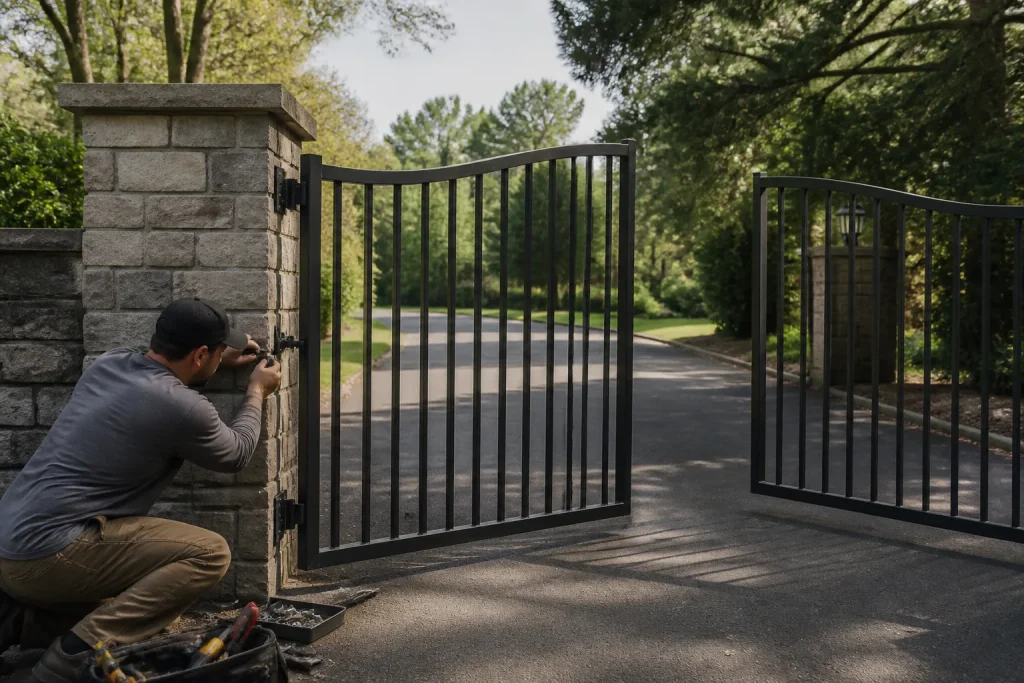
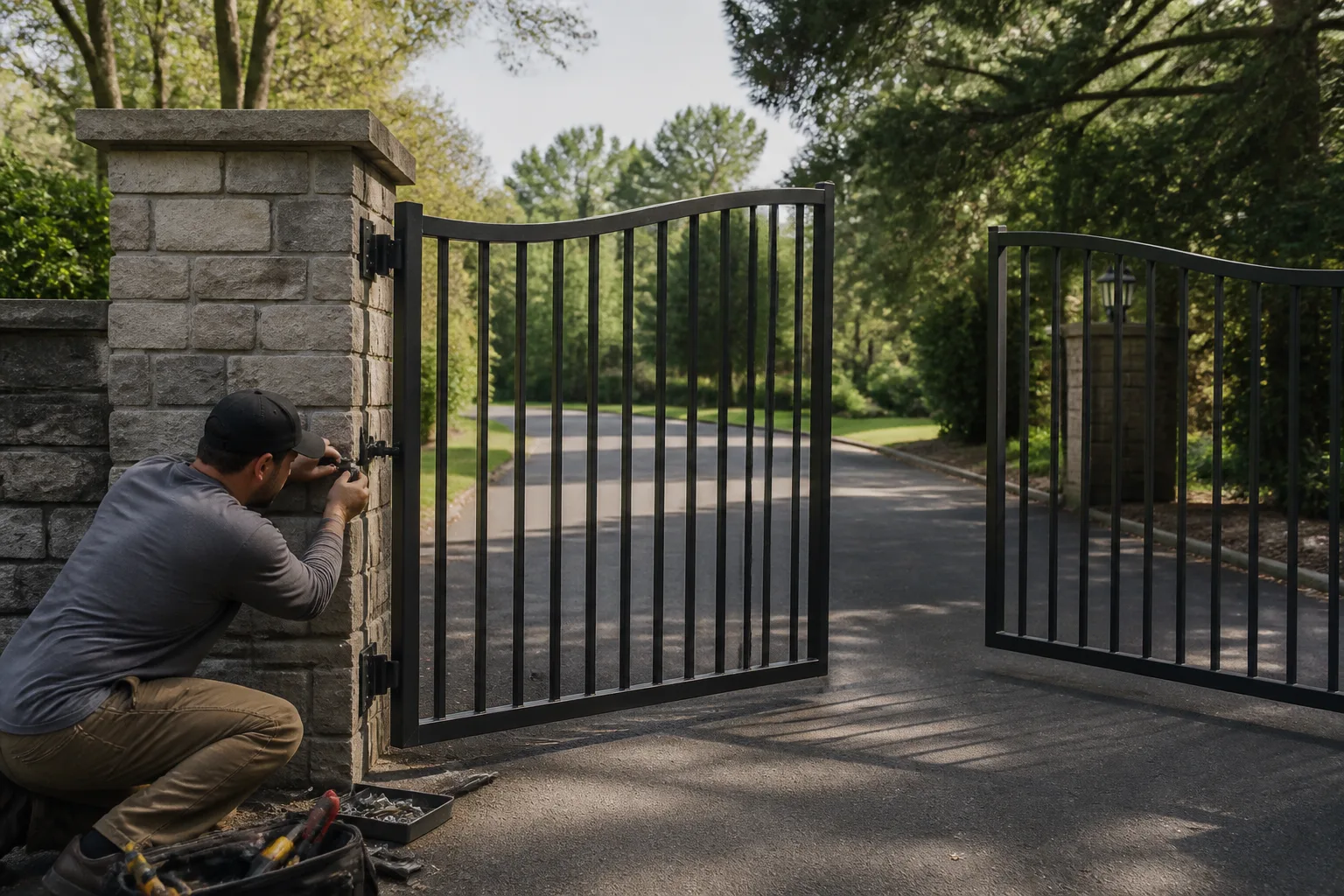
Our in-house welding capability matters here. When we evaluate a Sacramento gate for retrofit, we can repair structural metal on the same visit if the damage is localized. Most competitors who only swap operators would need to call a second contractor or recommend full replacement. Isaac and his team have worked on every major gate brand, your system is not unfamiliar territory.
Access-Control Integration: Planning Before the Concrete Sets
Access control is where installation scope and cost expand fastest, and where post-installation additions become expensive. Sacramento’s climate is relatively mild, but summer heat and winter moisture still punish exposed electronics. Planning the full system upfront prevents conduit runs through finished landscaping later.
Keypad entry: Simplest and most reliable for single-family homes. Standalone units with rolling-code security cost $200-400 installed. For multi-tenant properties, we program individual codes with audit trails using DoorKing or Elite systems.
Intercom systems: Audio-only or video. Video intercoms have become standard for Sacramento HOAs and estate properties, but require either hardwired Ethernet or robust WiFi coverage at the gate. We always test signal strength before specifying wireless units, dead zones in hilly areas like parts of Folsom or El Dorado Hills are common.
Loop detectors: Inductive loops cut into the pavement detect vehicles and can trigger gate opening, prevent closure on vehicles, or provide exit free-access. Installation requires asphalt or concrete cutting, which is trivial during new construction and messy afterward. If you think you’ll want automatic exit detection, install the loop during initial gate installation.
Telephone entry systems: For multi-tenant properties, these dial residents directly. Cellular and IP-based systems have largely replaced traditional landline connections, but they need reliable signal. We verify carrier coverage before specifying.
Integration complexity is why we handle access-control as part of our gate installation scope, not as an afterthought. When structural damage or broken metal is the problem, welding gets done on-site, no second contractor, no second visit.
Sacramento Permits, Codes, and HOA Realities
New gate installations in Sacramento trigger permit requirements that many homeowners and even some contractors overlook. Sacramento County and most incorporated cities require permits for any new driveway gate that crosses a public sidewalk or right-of-way, which describes nearly every installation we do.
Residential zones typically need:
- A building permit for the gate structure and operator electrical connection
- Possible encroachment permit if the gate swing or slide track extends into public right-of-way
- Compliance with visibility requirements, gates cannot block sight lines at intersections or driveway exits
Permit timelines vary. Sacramento County’s standard building permit review runs 2-4 weeks for residential gate projects. City of Sacramento proper is often faster for simple replacements, 5-10 business days if no structural changes. Where we see delays is HOAs. Many Sacramento-area homeowners associations require architectural review before any visible exterior modification, and review boards often meet monthly. Start that process before you order materials.
We’ve worked with HOA boards across Sacramento, from the gated communities of Granite Bay to condominium associations in downtown Sacramento. Understanding their documentation requirements upfront, material samples, dimensioned drawings, color match verification, prevents the 6-week stall that happens when a board rejects a completed installation for aesthetic non-compliance.
When to Call a Pro
If you’re weighing repair versus replacement for an existing gate, or planning new gate installation in Sacramento, the point where professional evaluation pays for itself is earlier than most people assume. A site visit to measure cycle requirements, check structural condition, and verify access-control needs takes 30 minutes and eliminates the specification mismatches that cause premature failure. Highpoint Gate Repair California home covers our full service area and capabilities.
For property owners in our West Covina service region, we offer the same evaluation process: Gate Repair in West Covina, Gate Installation in West Covina, and Gate Motor & Opener in West Covina.
The Bottom Line
The right Sacramento gate installation decision comes down to honest assessment of daily use, physical site constraints, and integrated access needs, not picking the prettiest design. Undersized operators, wrong gate types for the geometry, and access-control afterthoughts create the repair cycle that makes owners wish they’d replaced everything upfront. 11 years, one specialty: gates. 446 jobs reviewed, the track record speaks in numbers, not promises.
If you’re in Sacramento and need help evaluating whether to repair your existing gate or invest in new installation, Highpoint Gate Repair California offers free estimates. You get the owner on the job, not a subcontractor dispatched by a franchise. Call (866) 550-7854 and we’ll measure your site, count your actual traffic, and recommend equipment matched to real use.
Frequently Asked Questions
Basic residential swing gate installation with operator typically runs $2,800-4,500 in the Sacramento market, while slide gates with commercial-grade operators range $4,200-7,500 depending on access-control complexity. Retrofit installations on sound existing gates can reduce that by 30-40%. Call (866) 550-7854 for an exact quote, estimates are free.
Repair is cheaper when the gate structure is sound and only the operator or minor components failed. Replacement becomes the better investment when the gate frame is rusted, posts are loose, or previous repairs have compromised structural integrity. We’ve seen Sacramento homeowners spend $1,200 on repeated repairs to a gate that needed $3,200 replacement, the math flips after the second major service call.
Standard residential installation with no access-control complications takes one day. Projects requiring concrete work, extensive access-control wiring, or HOA-mandated custom fabrication typically run 2-3 days. Permit timelines add 2-4 weeks before work can begin in most Sacramento jurisdictions.
Yes, if the gate structure passes our structural evaluation. We verify post stability, hinge condition, gate balance, and pavement level before recommending retrofit. Our in-house welding means we can often repair minor structural issues during the same visit rather than defaulting to full replacement. Call (866) 550-7854 to schedule an evaluation.
Written by Isaac Bloom, Owner & Lead Technician at Highpoint Gate Repair California, serving Sacramento since 2015.
Need Gate Repair Help?
Call Highpoint Gate Repair California — licensed & insured, here with fast after-hours help in California.
(866) 550-7854